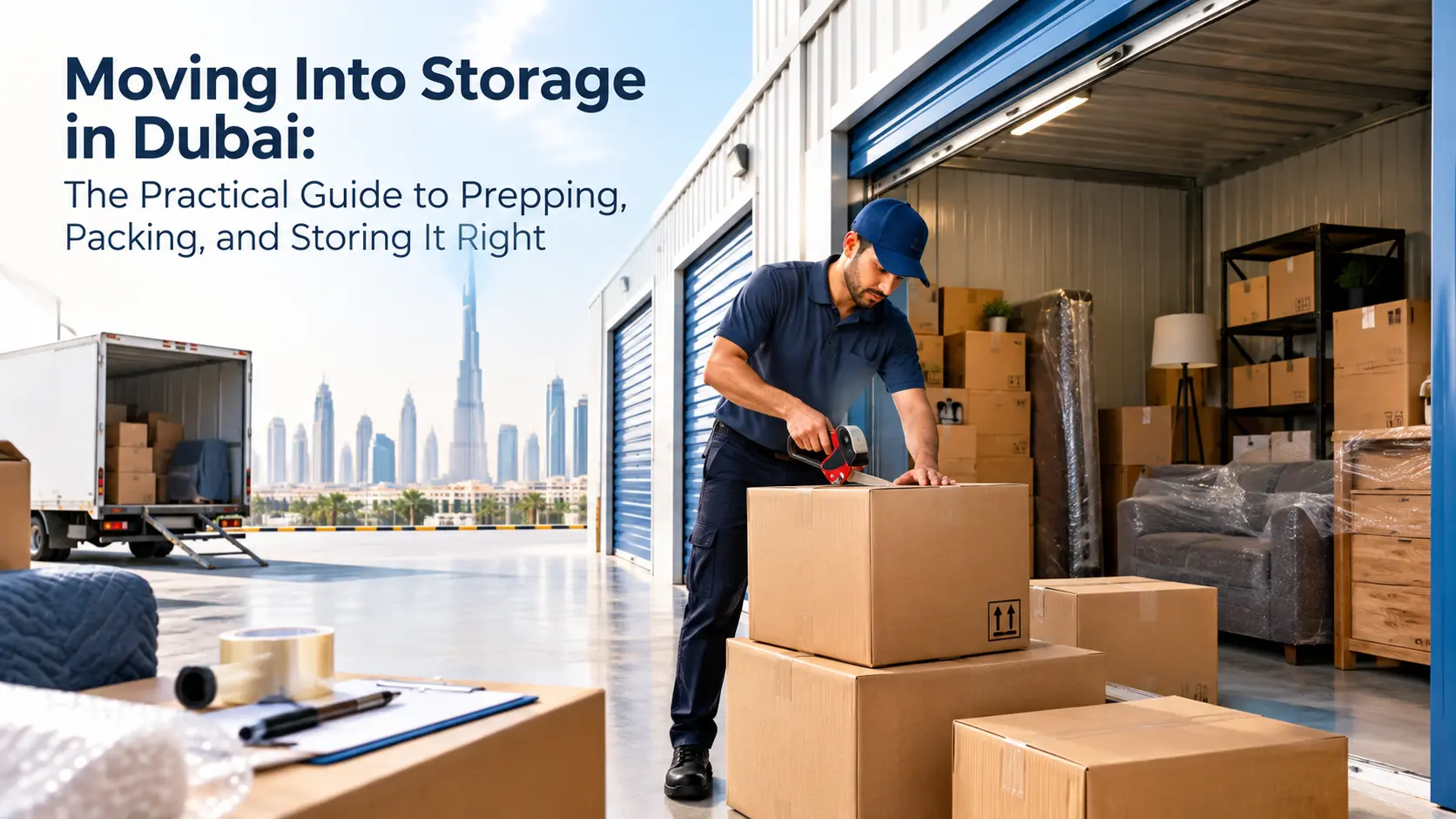
Moving into storage in Dubai takes more planning than storing a few boxes back home. Between the heat, the humidity spikes before summer, and Dubai’s dense, high-rise living, a rushed move into storage costs you more than money — it costs you damaged furniture, mould on fabrics, and wasted trips back to a unit you packed badly the first time. Here’s exactly how to get it right.
How Should You Prepare Before Moving Into Storage in Dubai?
Before a single box goes into the truck, sort your items into three piles: what’s going into storage long-term, what you’ll need to access again soon, and what you should just sell or donate. Dubai storage rent is charged by unit size, so every item you store without needing costs you monthly for nothing.
Next, take inventory. Photograph valuables, electronics, and furniture before they’re packed — this matters for insurance claims and for your own memory six months from now when you can’t recall what’s in box 14. List contents on the outside of each box, not just “misc.”
Check climate sensitivity item by item. Wood furniture, leather, artwork, musical instruments, electronics — none of these hold up well in a non-climate-controlled unit through a Dubai summer, when warehouse temperatures can climb far past what those materials can actually tolerate. If your facility doesn’t offer climate control, these are the items that need it most. Everything else can probably survive without it. These can’t.
Finally, confirm access rules before you commit. Some facilities in Dubai operate on limited access hours or require appointment-based entry — fine for long-term storage, a problem if you’re mid-move and need to grab something on a Friday evening. This is the core of how to move into storage without surprises later: decide, inventory, protect, confirm — in that order.
Set a realistic budget before you start comparing facilities, not after. Storage pricing in Dubai varies by unit size, contract length, and whether climate control is included — a small non-climate-controlled unit can look cheap until you factor in the cost of replacing a warped wardrobe. Ask for the full monthly rate upfront, including any deposit, insurance add-on, or administrative fee, so you’re comparing like for like across facilities rather than base rates alone.
Sort your paperwork too. Tenancy contracts, Ejari documents, warranties, receipts for anything valuable — keep these in a folder you carry with you, not packed into a box headed for the unit. And if you ever have to file an insurance claim, these are the first things they’ll ask for. Having to dig through a packed storage unit to find them at that point? That kind of defeats the whole reason you planned ahead in the first place.
What Areas Should You Consider When Choosing a Storage Facility?
Not all storage solutions in Dubai are built the same. That difference doesn’t really show up until your items are already sitting inside a unit you can’t easily switch out of.
- Climate control. This is non-negotiable for anyone storing electronics, documents, textiles, or wood. Dubai’s heat and humidity swings do real damage to uncontrolled units — warped furniture, corroded metal fittings, mildew on upholstery.
- Location and access. If you’re already based near Jebel Ali or Dubai Investment Park, a facility there is convenient — you’re not fighting traffic to get to your own stuff. But if you’re not, don’t just pick it because it’s cheaper or bigger. Think about how often you’ll actually be driving out there. A “great deal” 40 minutes away stops feeling like a deal after the third trip.
- Security. Look for 24/7 CCTV, individually alarmed units, and controlled entry — not just a locked gate. Ask specifically how the facility handles after-hours access and whether staff are on-site or the facility runs unmanned overnight.
- Unit flexibility. Your storage needs during a move rarely match your needs six months later. Facilities that let you upsize or downsize your unit without re-signing a fresh contract save you both money and hassle.
- Pest and moisture control. Ask directly — don’t assume. Ground-level units near landscaping or water features carry higher risk in this climate.
- Insurance. Check whether your homeowner’s or renter’s policy actually covers stuff once it’s sitting in a storage unit — a lot of them don’t, even though people assume they do. If it doesn’t, ask the facility if they offer their own cover. Most people only find out there’s a gap after something’s already gone wrong, which is a rough way to learn.
- Fire safety. Ask what fire suppression system the facility runs and whether it meets Dubai Civil Defence requirements. A facility that can answer this specifically — not vaguely — is one that takes storage conditions seriously rather than treating the warehouse as an afterthought.
- Reputation and reviews. Star ratings alone don’t tell you much. Scroll past them and read the actual complaints — that’s where the real information sits. If three different reviewers mention damaged furniture, or a surprise fee that showed up on the final invoice, believe them over the facility’s own marketing. A place that’s a little pricier but has a clean track record on the things you actually care about beats a cheaper option you’ll be arguing with in six months.
How to Choose and Coordinate With Packers and Movers?
Get this part wrong and it doesn’t matter how good your storage facility is — your things arrive damaged before they even get there. Whether you’re moving items into storage yourself or hiring help, the handoff between movers and facility is where most problems start.
If you’re hiring packers, don’t just book them and hope for the best. Get the scope in writing. Ask exactly what’s included: do they pack everything, or just the big stuff? Will they take furniture apart? And critically — do they drop straight into your storage unit, or only to a new address, leaving you to sort the rest? Some moving companies in Dubai already work with storage facilities and can handle both legs in one go. It’s worth asking before you sign anything, because it can turn a two-day headache into an afternoon.
Check the truck size against what you’re actually moving. This trips people up more than you’d think — a truck that’s too small means a second trip, and every extra trip is another chance for something to get chipped, scratched, or dropped.
Book your loading slot with the storage facility ahead of time too. Most places in Dubai want you to reserve a bay or access window, especially around the busy stretches — end of school term, lease renewal season, that sort of thing. Show up with a full truck and no booking, and you’ll be sitting in the car park while someone tries to squeeze you in.
Before the movers start loading, walk them through anything fragile or expensive yourself. Don’t just leave it on a checklist somewhere. A quick conversation — this box has glassware, that lamp was my grandmother’s — goes a long way, and it’s the single easiest thing you can do to avoid a damage claim later.
And don’t just take the first quote you get. Get at least two, ideally three. Ask if they’re actually licensed to move goods in Dubai — some aren’t, and you’d be surprised how few people check. Ask about transit insurance specifically too, the kind that covers your stuff while it’s in the truck, not just their staff. If one number comes back way lower than the others, that’s not luck, that’s a red flag. Could be an inexperienced crew. There could be no real insurance behind it. Could just be that “extras” like stairs or a long carry from the parking lot magically appear on the invoice once your things are already on the truck. Cheap paper has a way of getting expensive fast.
How to Safely Load Bulky and Outdoor Items Into Storage?
Bulky and outdoor items need different handling than boxed goods, and getting this wrong is where most storage damage happens.
- Furniture. Disassemble what you can — bed frames, large tables, wardrobes. It reduces volume, prevents pressure damage during transit, and makes stacking inside the unit far more efficient. Wrap in moving blankets, not plastic sheeting, which traps humidity against wood and fabric surfaces.
- Appliances. Clean and fully dry refrigerators, washing machines, and ovens before storage. Any trapped moisture becomes mould within weeks in a sealed unit. Leave appliance doors slightly ajar if the unit allows it.
- Outdoor and garden items. Hose down and dry garden furniture, tools, and equipment before storing — sand and residue trapped in joints corrode metal fittings over time. Store bicycles and outdoor gear vertically or on wall hooks where possible to protect tyres and frames from the weight of stacked boxes.
- Heavy and bulky pieces first. Load large furniture and heavy items against the back wall and sides of the unit first, distributing weight evenly. This protects the structural stability of your stack and stops lighter, more fragile boxes from being crushed later.
- Never stack heavy on light. It sounds obvious until you’re on hour three of a hot move and just want the truck empty. Plan your load order for moving items into storage before the truck arrives, not while it’s happening.
- Mattresses and upholstery. Stand mattresses up on their side instead of laying them flat — it saves floor space, and it also keeps moisture from pooling underneath, which is the fastest way to end up with mildew in a Dubai unit. Skip the sealed plastic wrap too; a breathable cover does the same job of keeping dust off without trapping humidity against the fabric. The same logic applies to sofas and armchairs. Cover them, but let them breathe.
- Pallets for the floor. Ask if the facility lets you use pallets, and if they do, put your boxes and furniture legs up on them rather than straight onto the concrete. It’s a small thing, barely takes any extra time, but it keeps moisture from creeping up off the floor during the humid months — and that’s often where the damage nobody expects starts.
How to Organise Your Belongings Inside the Storage Unit?
A storage unit you can’t navigate defeats the purpose of storing anything short-term. Organise it like you’d organise a small room, not a dumping ground.
Create a centre aisle if the unit size allows it — even 60cm of walking space means you can reach items at the back without unloading the entire unit. Store items you’ll need again soonest near the entrance; put pure long-term storage at the back.
Use shelving units inside larger storage spaces to get boxes off the floor entirely — this protects against any moisture that does find its way in and makes vertical space usable instead of wasted.
Label every box on at least two sides, not just the top, since you often can’t see the top once boxes are stacked. Keep a simple written or digital inventory list matched to box numbers; five minutes now saves you unpacking three boxes to find one item later.
Group by category, not by room. “Kitchen,” “documents,” “kids’ items,” and “seasonal” hold up better over months of storage than a room-based system from a home that no longer exists in that layout.
Rotate seasonal items rather than leaving them buried. If you’re storing items you’ll swap out with the season — heaters, holiday decorations, off-season clothing — keep these near the front so you’re not unpacking the whole unit twice a year. A basic spreadsheet or a free inventory app on your phone works better than memory for tracking what’s where once you’re past a dozen boxes.
Tips for a Smooth Move Into Storage
Here’s a quick checklist covering how to move into storage without the usual last-minute scramble:
- Book your unit size slightly larger than your estimate — underestimating space is the most common planning mistake, and upsizing later is more disruptive than starting right.
- Move during cooler parts of the day (early morning is best in Dubai) to protect both your belongings and your moving crew.
- Avoid storing anything perishable, flammable, or restricted under UAE storage regulations — check your facility’s prohibited items list before packing, not after.
- Keep a “first week” box of essentials separate from storage if you’re between homes — chargers, documents, basic tools.
- Reconfirm your move-in date and access slot 24–48 hours ahead. Facilities get busy, and a quick call prevents a wasted trip.
Conclusion
A smooth move into storage in Dubai comes down to three things: preparing before the truck arrives, choosing storage solutions in Dubai built for this climate, and organising the unit like you’ll actually need to use it. Skip any one of these and you’ll pay for it later — in damaged items, wasted space, or an unbroken afternoon spent digging through boxes for one folder. Get it right the first time, and your storage unit works for you instead of against you.
Need a storage solution in Dubai? My Space can help you choose the right space, arrange collection, and store your belongings with a plan that fits your needs. Contact us today to discuss your storage requirements and get started.