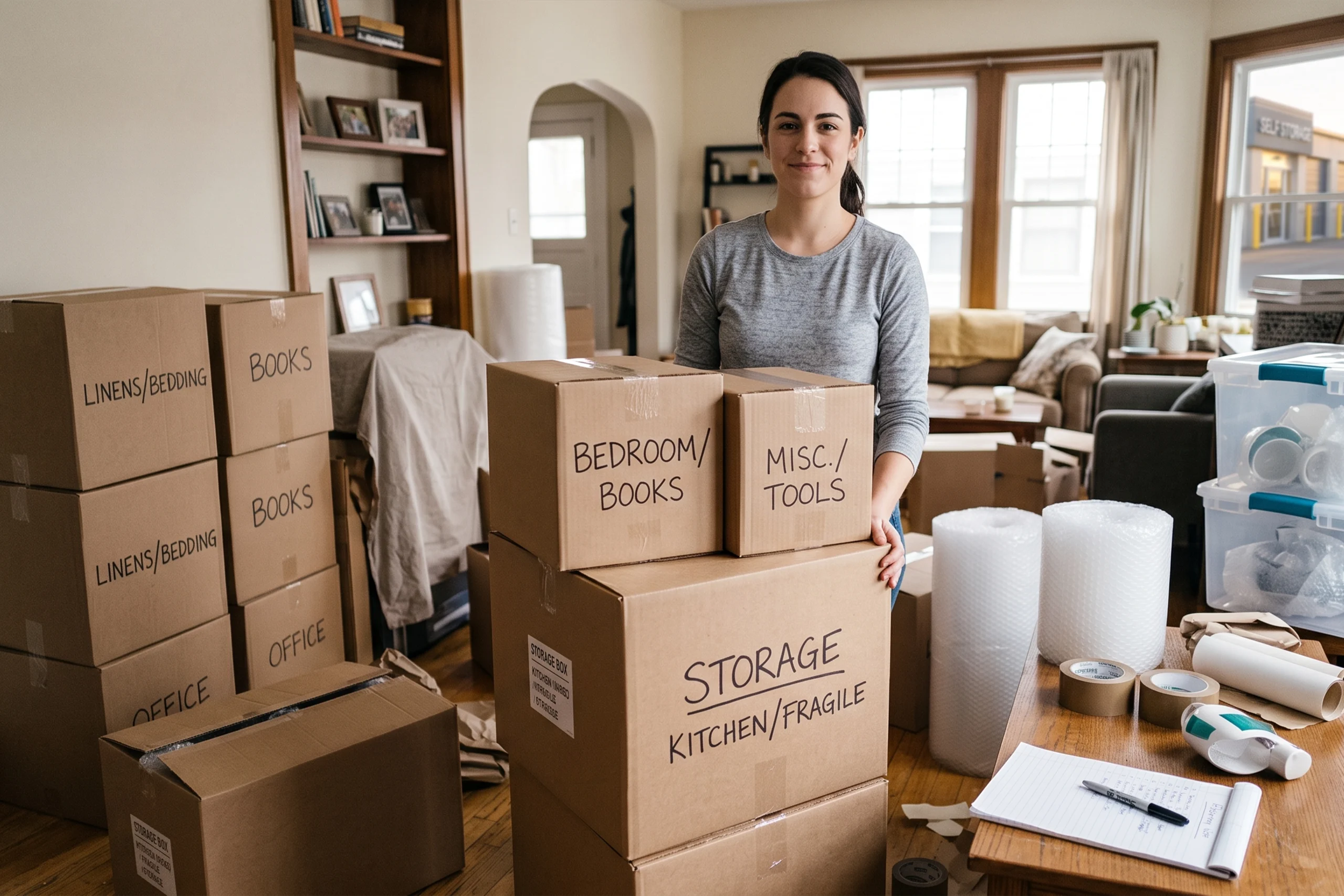
How to Prepare Your Belongings for Secure Storage
Packing for storage sounds easy at first. Put things in boxes. Tape them shut. Move them into a unit.
Done.
But anyone who has opened damaged boxes months later knows it’s not always that simple.
Poor packing can lead to broken items, crushed boxes, moisture problems, and a lot of frustration when you need your belongings back.
The good news is this. You don’t need to be a professional mover to pack properly. A few smart habits can make a huge difference. This guide walks through practical DIY packing tips to help keep your items safe, organised, and ready for secure storage.
Start With a Plan Before You Pack Anything
Most packing mistakes happen before the first box is even filled.
People rush.
They grab random boxes, mix unrelated items together, and figure it out later.
That usually creates problems.
Instead, pause for a few minutes and make a simple plan.
Group your belongings into categories:
- Fragile items n- Clothes
- Books
- Electronics
- Important documents
- Everyday household items
Once things are grouped, packing becomes faster and much more organised.
Use the Right Boxes (It Matters More Than You Think)
Not all boxes are equal.
Old supermarket boxes or weak cardboard might seem fine in the moment, but they often collapse under weight.
Stronger boxes protect better and stack better.
Try to use:
- Double-wall boxes for heavier items
- Small boxes for books
- Medium boxes for mixed household goods
- Larger boxes for lighter bulky items
A common mistake is using huge boxes for heavy things.
They become impossible to lift and easier to tear.
Don’t Overpack Boxes
This happens all the time.
People want to use fewer boxes, so they cram everything in.
The result?
Boxes split, corners crush, and items inside get damaged.
It’s better to use one extra box than one overloaded box.
If a box feels too heavy to carry comfortably, it probably is.
Wrap Fragile Items Properly
A towel around a plate is better than nothing.
But if you want real protection, use proper cushioning.
Bubble wrap, packing paper, foam sheets, or soft linen can all help.
For fragile items:
- Wrap each item separately
- Fill empty gaps in the box
- Label the box clearly
- Keep heavier items at the bottom
Movement inside a box is usually what causes damage.
Less movement means less risk.
Clean Everything Before It Goes Into Storage
This step gets skipped more than it should.
Dust, crumbs, or moisture can create issues over time.
Especially if items stay in storage for months.
Before packing:
- Wipe furniture down
- Wash clothing and fabrics
- Dry everything fully
- Empty appliances
Clean items come out of storage in better condition.
Simple as that.
Protect Furniture the Smart Way
Furniture often costs the most to replace, so it deserves attention.
Take apart what you can.
Remove table legs, shelves, bed frames, and loose parts where possible.
This saves space and reduces damage risk.
Then:
- Wrap surfaces with blankets or covers
- Keep screws in labelled bags
- Avoid placing sharp items against upholstery
Small effort now saves a lot later.
Keep Electronics Safe
Electronics need a little extra care.
If you still have original packaging, use it.
If not, use snug boxes with padding.
A few tips:
- Remove batteries if possible
- Wrap cables separately
- Label cords clearly
- Keep screens protected with soft padding
You’ll thank yourself later when setting everything up again
Label More Than You Think You Need To
Most people under-label.
Then months later every box becomes a mystery.
Use clear labels on multiple sides.
Write what’s inside and where it belongs.
Examples:
- Kitchen mugs
- Winter clothes
- Office cables
- Bedroom décor
Specific labels save serious time later.
Create an Essentials Box
This one is underrated.
Keep one separate box for items you may need soon.
Things like:
- Chargers n- Documents
- Basic tools
- Cleaning cloths
- Spare toiletries
Store it near the front for easy access.
Otherwise you may end up opening six boxes to find one charger.
Use Space Inside Items
Suitcases, drawers, storage bins, and baskets can all hold smaller items.
Use that space wisely.
It reduces loose packing and helps maximise room.
Just avoid placing heavy items inside delicate furniture pieces.
Think About Weight Distribution
This matters when stacking.
Heavy boxes should go at the bottom.
Light boxes on top.
Seems obvious, but it’s often ignored.
Poor stacking causes crushed boxes and unstable piles.
A neat stack is safer and easier to access.
Leave a Small Access Path
Many people fill storage units wall to wall.
Then when they need something from the back… chaos begins.
If possible, leave a narrow walkway or small gap.
It makes future access far easier.
Avoid These Common DIY Packing Mistakes
A few mistakes keep showing up.
Mixing Rooms Together
Kitchen items mixed with office supplies mixed with bathroom items.
It creates confusion later.
Using Weak Tape
Cheap tape fails faster than people think.
Use strong packing tape and seal bottoms properly.
Packing Damp Items
Even slightly damp fabrics can cause smells or mold.
Always dry items first.
Forgetting Inventory Notes
A simple phone note listing major boxes can save time later.
If You’re Storing Long-Term
For longer storage periods, a little extra care helps.
Use covers for furniture. Rotate or check items occasionally if possible. Keep valuables packed securely.
Long-term storage is usually where good packing really pays off.
The Real Goal of Packing Well
It’s not just fitting things into boxes.
It’s making sure your belongings come back out in the same condition they went in.
That’s the difference.
Anyone can pack quickly.
Packing properly takes a bit more thought—but saves stress later.
Final Thought
DIY packing doesn’t need to be complicated. Use strong materials. Stay organised. Protect fragile items. Label clearly. Take your time now, and future you will be grateful later. Because secure storage doesn’t start at the facility. It starts with how you pack before anything gets there.