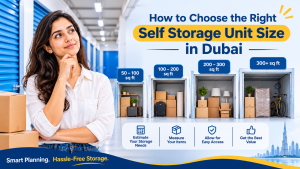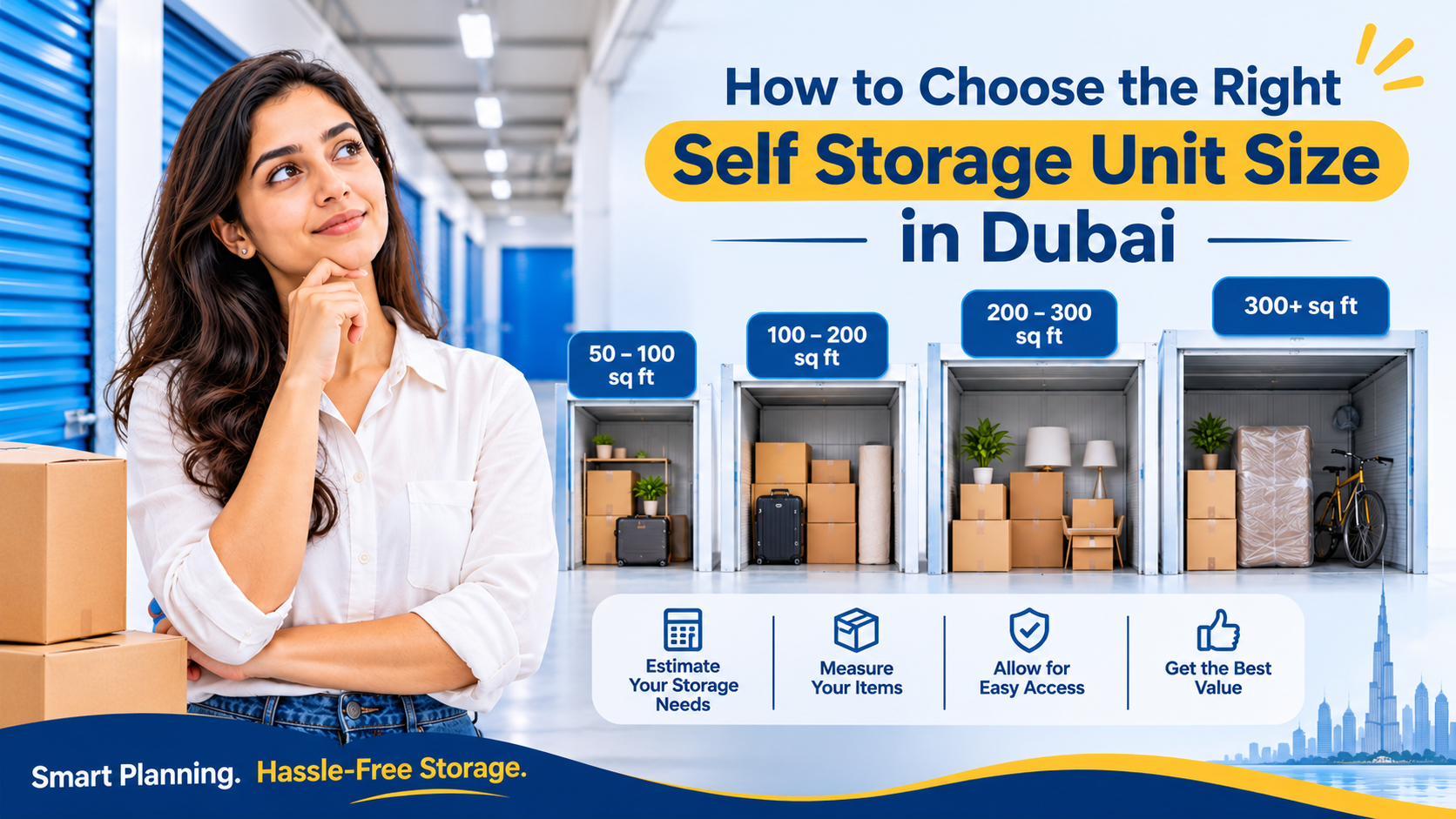
Without a plan, picking the right self storage unit size in Dubai is mostly guesswork. Go too small and your sofa won’t fit, or you can’t reach the box you need. Go too big and you’re paying every month for an empty floor.
Getting it right comes down to three things: cost, access and usable space. A unit that balances all three makes storage easier from the day you move in to the day you move out.
It also helps to know that storage unit sizes in Dubai aren’t standard. Floor dimensions, ceiling heights, layouts and stacking rules differ from one provider to the next. A “small” unit at one facility might be noticeably bigger or smaller at another.
So how do you work it out? Make a list of what you’re storing. Measure the bulky items. Leave room to move around safely. Then confirm the real dimensions with the facility before you book. That’s the approach this guide walks through.
Start with an Inventory of What You Need to Store
Before you think about square metres, think about stuff. Write it all down. A rough list is fine, as long as nothing big gets left off.
Go room by room, or category by category:
- Boxes, roughly counted by size
- Furniture, such as sofas, beds, tables, wardrobes and chairs
- Appliances, like fridges, washing machines and air conditioners
- Business items, such as stock, files, displays or equipment
- Awkward shapes, like bikes, mirrors, rugs, lamps and sports gear
Next, split the list in two. What will you need to get to while it’s in storage? And what can be packed away and left alone? Things you’ll want often should go near the front, and that affects how much room you need.
Last, flag anything fragile, heavy or valuable. A glass cabinet can’t have boxes stacked on it. A heavy safe needs to sit on the floor. These items shape the layout, and the layout shapes the size.
Measure Large Items and Estimate Volume
Boxes are easy to estimate. Furniture isn’t. So grab a tape measure and get the length, width and height of anything big: sofas, beds, wardrobes, dining tables, fridges, washing machines.
Then ask yourself which pieces can come apart. A bed frame takes up far less space flat-packed than assembled. Same with table legs and some wardrobes. Measure them in the state they’ll actually be stored, and only dismantle pieces you can safely take apart and put back together.
Counting boxes alone tends to give you a number that’s too small. A simple sketch works better. Draw a rectangle for the floor, then pencil in your largest items to scale. You’ll quickly see whether the sofa and the wardrobe fit side by side, or whether you need more depth.
An online storage space calculator can give you a rough starting point too. Just treat it as a ballpark. It doesn’t know your wardrobe is 2.2 metres tall or that your sofa doesn’t come apart.
Don’t put the tape measure away yet. Check the lift in your building, the turns on the stairs and your front door. Then ask the facility how wide and tall the unit door is. It’s a common trap: the wardrobe fits inside the unit, but you can’t get it through the door. Find that out now, not when three of you are trying to angle it in sideways.
One more thing to ask the facility for: the real internal size of the unit, including how high you can actually stack. Most people forget about height. But if you can stack safely up towards the ceiling, a smaller floor area might do the job.
Account for Aisles, Stacking, and Access
It’s tempting to fill every inch. Don’t. A unit packed wall to wall looks efficient until you need something from the back. Then you’re unloading half of it in a corridor, and that’s when things get dropped or people get hurt.
Leave a narrow walkway, especially if you’ll be visiting during the rental. Put the things you’ll need most near the door.
Stacking is mostly common sense. Put the heavy things at the bottom. Only stack boxes that are strong, properly packed and roughly the same size. If a pile starts leaning, take it down and rebuild it. Also check what the facility allows, since there may be a limit on how high you can stack or what can rest against the walls and door.
Now picture the tricky items once they’re inside. Say you’ve got a corner sofa or a tall fridge. Will it stand properly in one piece, with room left to get past it? If the answer’s no, you’re looking at either a bigger unit or a different way of arranging things.
Plan the layout before move-in day, not during it. The biggest, least-needed items go in first, against the back wall. Then work forward, keeping the boxes you’ll want later closest to the door. Load the van in the same order and unloading gets much quicker. You’ll also see whether the space really works before the last box goes in, while there’s still time to change it.
Match the Unit to Your Storage Situation
What you’re storing, and why, changes how you should size the space.
Moving or Renovating a Home
Sofa, beds, wardrobe, dining table. Measure those first, because they’ll decide the size. Boxes just squeeze in around them. Also be honest about how much is going in. Is it the whole flat, or just the two rooms being redone? People often underestimate furniture storage in Dubai when they move. A three-seater and a king bed take up a lot more floor than you’d think once they’re side by side.
Seasonal or Personal Belongings
Think holiday decorations, winter clothes for travel, camping gear, kids’ things that have been outgrown. A small storage unit in Dubai is often enough here. Pack tightly in matching boxes and label them clearly. Clear plastic tubs help too. You can see what’s inside without opening every single one. Documents, electronics and anything that doesn’t cope well with heat or dust should go in suitable containers. Put what you’ll want back soonest at the front.
Business Stock, Files, or Equipment
For a business, the big question is how often things come and go. If you’re pulling stock out every week, you can’t have it buried behind a wall of boxes. You’ll need aisles, even if it costs you a bit of floor space. Shelving or pallets can help you use the height, so ask the facility whether they’re allowed. And think about the heavy stuff. Machinery or bulk stock might need lifting gear, or a set way of storing it, so plan for that before move-in.
Common Storage Size-Planning Mistakes
A few mistakes come up again and again.
- Choosing by monthly price alone. Comparing self storage Dubai price quotes is sensible. But a cheaper unit that’s too small, or comes with terms that don’t suit you, isn’t a saving. Check usable dimensions and terms before price.
- Underestimating the big furniture. Sofas and wardrobes take up more space than they seem to. People also forget the loose parts: bed slats, table legs, shelves, cushions.
- Getting packing wrong both ways. Loose, half-filled boxes waste space, so you end up thinking you need a bigger unit. On the other hand, forgetting to leave access space makes you underestimate.
- Trusting the size label. “Small”, “medium” and “large” don’t mean the same thing everywhere. Always ask for actual measurements.
- Forgetting that plans change. Renovations run over. Businesses take on more stock. If there’s a chance you’ll add to the unit later, allow for it now, or check how easy it is to move to a bigger space if you need one.
- Ignoring the rules. Some items may not be allowed, and some layouts may not be permitted. A unit that technically fits your things but breaks facility rules isn’t the right unit.
Questions to Ask Before Booking a Unit in Dubai
Before you commit, put these to the facility:
- What are the exact internal dimensions, and how do I access the unit?
- Can I view the unit first, or do you offer help estimating the size I need?
- Can I use shelves, pallets or other equipment inside?
- What’s the total cost, including any extra charges? Is there a minimum rental period, and what do I need for move-in?
- Can I switch to a different size later? If so, are there fees, and does it depend on availability?
- What items aren’t allowed, and what protection or insurance should I arrange?
The answers tell you a lot about the space and about the provider.
Storage Unit Size Selection Checklist
Use this before you book:
☐ Make a list of everything you’re storing and measure the largest items
☐ Decide which items you’ll need to access during the rental
☐ Ask for exact unit measurements, not just a size name
☐ Leave enough room to arrange and retrieve items safely
☐ Confirm the price, terms, restricted items and whether you can change size later
☐ Check the final fit with the facility before you book
Work through those six steps and you’ll know how to choose a storage unit size that fits what you own, not what a label suggests.
Conclusion
The right self storage unit size in Dubai comes from what you actually own. Measure your belongings, think about how often you’ll need them, and look at the total value of the unit, not just the monthly price. Do that, and it stops being guesswork.
Compare a few options. And when you talk to providers, share your inventory and ask what size they’d recommend. A good facility will tell you honestly, even if it means a smaller unit.
Looking for self storage in Dubai? Get in touch with My Space Storage. Send us your list, and we’ll tell you which unit sizes are available and put together a quote that fits what you’re storing.